What Survived the Fire
When USAID was Dismantled, the Calling Endured


On 7 September 2009, Kinglake National Park in Australia burned. More than 96 percent of the park was scorched in fires that came to be known as Black Saturday.
The fire stripped the landscape bare. Tree canopies vanished. Foliage disappeared. Silence replaced the sound of wildlife. Homes and infrastructure were destroyed. What remained were blackened trunks and ash.
And then, slowly, life returned.
Grass trees, adapted to fire, pushed up through the burned earth. Leaves emerged from beneath charred bark, rebuilding the canopy. Banksia, sealed tight in woody cones, opened in heat and scattered new life across the ground.
In January 2025, a different kind of fire began. For thousands of USAID workers, it felt no less consuming.
By July, the U.S. Agency for International Development (USAID) had been dismantled. Offices closed. Programs stopped. Millions were left without assistance. Thousands of careers ended abruptly. A professional home was gone.
But the humanitarian calling did not disappear.
Amid shock, grief, and anger, former USAID colleagues began to adapt. The institution was gone, but the people behind it were not. They moved into new organizations, neighborhoods, classrooms, and civic spaces.
Their work changed shape, but their calling did not end.
Before the Fire
Since 1961, USAID has been the primary US government agency responsible for humanitarian and development assistance overseas.
To advance America’s national interest, USAID’s mandate was two-fold: to deliver life-saving aid in the aftermath of disasters and during conflict, and to support long-term development through investments in health, education, agriculture, and governance.
By the end of 2024, while accounting for less than 1 percent of the U.S. federal budget, the United States provided roughly 30 percent of global development aid, and more than 40 percent of humanitarian assistance.
Between 2001 and 2021, USAID-funded programs are estimated to have contributed to saving more than 91 million lives, including 30 million children.
Deborah Kaliel spent 18 years at USAID working to prevent and reduce deaths from HIV/AIDS through the President’s Emergency Plan for AIDS Relief (PEPFAR).
“When I began, it was an exciting time,” she said. “HIV/ AIDS was the leading cause of death in Africa, and PEPFAR was the largest single-disease initiative in the world. By the end of 2024, it had saved 26 million lives, including almost 8 million infants.”
What energized Kaliel most in recent years was how the agency began directing more funding to local organizations and governments, enabling them to lead and deliver programs themselves.
“This was a major change in USAID’s model,” she said.
By the end of 2024, 68 percent of the USAID PEPFAR funding was flowing through 150 local organizations providing treatment, preventing babies from contracting HIV, and educating young people about the risks.
“I visited these local clinics and organizations and shared meals with these front-line workers. We were on the brink of mainstreaming this approach across USAID.”
For Kaliel, it marked the culmination of a life’s work.
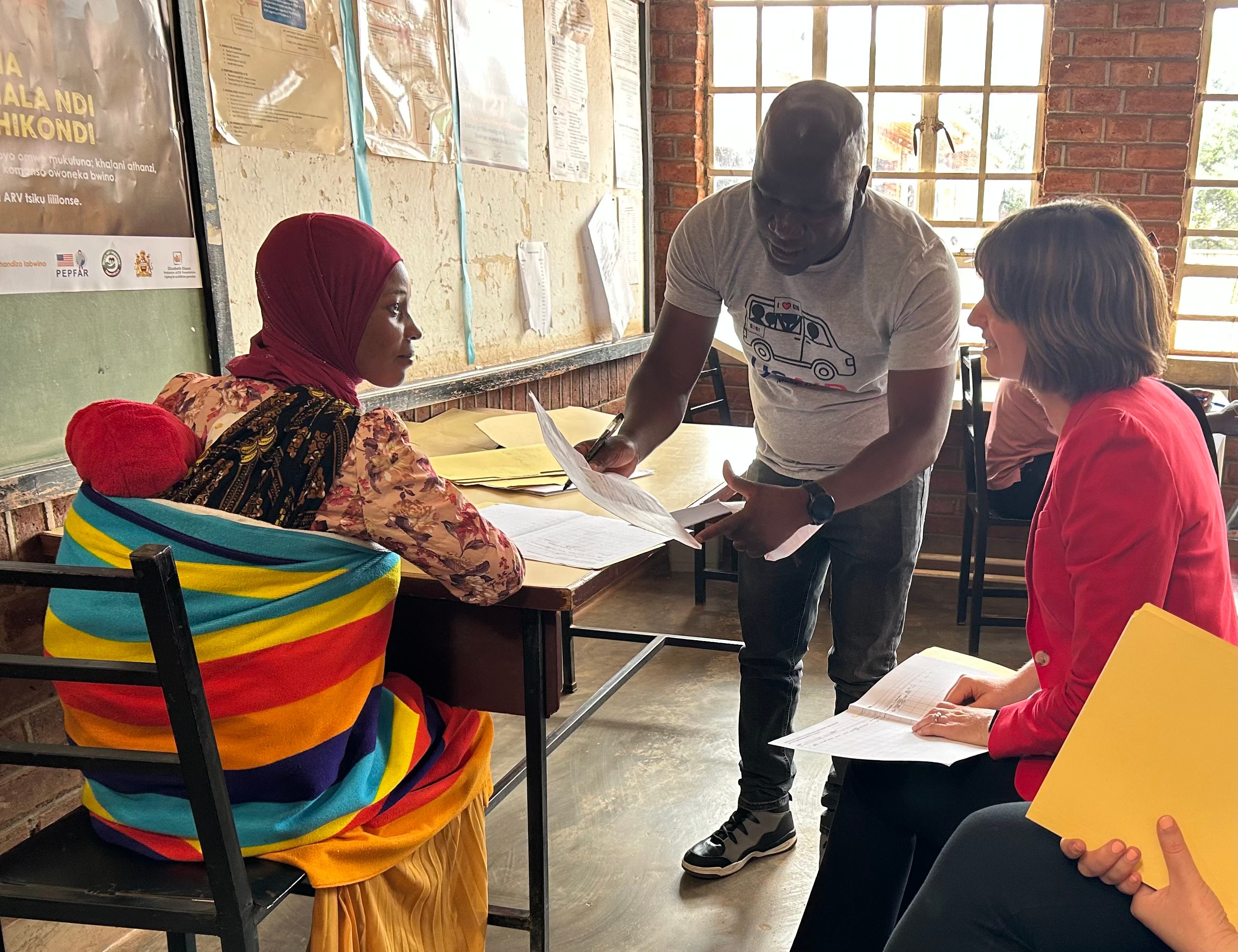
Micaela White’s desire was to make people’s lives a little better in their moment of greatest need.
White spent 16 years working for USAID’s Disaster Assistance Response Teams, one of hundreds of staff responding to crises around the world to save lives, alleviate suffering and reduce the impact of disasters, from earthquakes and floods to disease outbreaks, famine and conflict.
Her first deployment was to Haiti in 2010, where she worked on search-and-rescue after an earthquake killed more than 200,000 people.
“I will never forgot it,” she said. “So much devastation in one place. Bodies in the streets. The sound of silence.”
When a cholera outbreak followed, White stayed. “The solution was simple, soap, water, bleach,” she said. “I travelled to villages doing basic hygiene education.”
Haiti could have turned her away from humanitarian work, but instead she saw the difference emergency aid could make. “As horrible as it was, the cholera outbreak could have been so much worse,” she said.
Over the next 16 years, White was deployed roughly 80 per cent of the time, responding to crises in places including Syria, Libya, and Sudan.
“I had the best job,” White said. “I saw the lowest of lows, but I also saw the highest of highs. It reaffirmed my belief in the human spirit.”
Nicole Johnson wanted to support communities to lead their own development efforts. After volunteering in Kenya for two years, embedded in a local organization, she saw firsthand the power of community-led work.
“My love for this work came from capacity-building,” Johnson said.
“Kenyans are exceptionally capable. Local communities understand their own problems, needs, and solutions far better than any outsider. But there were skills that I could contribute.”
Johnson spent the next 15 years working with communities and young people in Kenya, Cambodia, and Vietnam.
In 2024, after nearly a decade living in Cambodia, she began managing a five-year USAID-funded project focused on supporting youth and grassroots civil society.
“A lot of USAID’s work in Southeast Asia was about countering geopolitical influences,” Johnson said. “The project I managed focused on strengthening youth leadership and civil society.”
Within 18 months, the program was providing grants to 23 community-based organizations. Young people were learning technical skills, organizing locally, and addressing issues they cared about, from human trafficking to improving safety and cleanliness in their neighborhoods.
Ultimately, USAID’s work was broad and sustained. It was grounded in decades of partnership-building and trust, and in the belief that U.S. stability and prosperity are not secured through military and economic power alone, but through investment in people.
For the thousands of USAID employees and contractors, this was not just a job. It was a calling, shaped by personal histories: volunteering in the Peace Corps, participating in Model United Nations in high school or college, or recognizing their own families in the people they served.
Their work mattered. Deeply and personally.
And then the fire came.
The Fire
Inauguration Day, 20 January 2025. An executive order called for the review and realignment of foreign aid and a 90-day pause on all foreign development assistance. Eight days later, a stop work order followed.
White was on deployment in Sudan when her email and computer access were shut down. She began managing $842 million of emergency assistance from her phone while trying to help her Sudanese staff find new employment.
By the end of March, she was ordered to leave. With U.S funding cut nearly in half, the humanitarian response contracted sharply. Only a third of people facing famine could receive regular food assistance. More than 180 health facilities closed, preventing millions from accessing urgent care.
Kaliel assumed PEPFAR would be protected.
“Even Project 2025 cited it as a model,” she said.
“Then everything collapsed. No communication with our 150 partner organizations. No review. Just stopped. Doctors were calling, asking whether they could treat mothers knocking on their doors. We couldn’t answer them.”
Inside USAID’s headquarters in Washington, the dismantling became visible.
“Every day there was another 5pm email,” Kaliel said.
“Teams disappeared. Senior-leadership was escorted out. Then one day the photos hanging on the walls came down. Children smiling in schools. Mothers holding babies. The frames were left empty. The photos put in the trash.”
In Cambodia, Johnson was uneasy but initially reassured by the geopolitical relevance of the project she was managing. Then an email arrived.
“The project is terminated. You can no longer communicate with USAID staff,” she said. “I had to lay off all the local staff. In Cambodia, savings are rare. Losing a job becomes an immediate family emergency.”
Within months, more than half of the 23 organizations supported through the program had ceased operating.
In total, roughly 80 percent of foreign aid projects worldwide were cancelled, and humanitarian assistance declined by 85 percent.
It is estimated U.S aid cuts contributed to between 500,000 and one million deaths in 2025 alone.
By mid-2025, thousands of USAID employees and contractors, and many more working for organizations reliant on U.S. funding, were unemployed, their careers and callings abruptly cut short.
The fire was intense. It burned fast. And it destroyed.
The Aftermath
Shock. Grief. Anger. Fear.
“I cried every day for weeks,” Kaliel said. “It was extremely traumatizing. This wasn’t just a job. I believed in what I was doing and the difference it made.”
For six weeks, Johnson laid off staff in Cambodia, liquidated assets, and prepared to leave the only country her son had known.
“And then I was in Minnesota, living in my parents’ home,” she said. “In a country I hadn’t lived in for twenty years. My belief in the work USAID was doing was so strong. And then it collapsed. Fifteen years of work, dismissed as wasteful.”
Returning from Sudan, White found herself back in Pittsburgh with her family, the impact of aids cuts on people in Sudan and elsewhere weighing heavily on her.
“I’ve seen famine. I know what it does to a person,” she said. “When my kids don’t finish their food, I freak out. They don’t know what hunger looks like.”
As staff grieved and tried to process the consequences for people aboard, the question of what came next was immediate and unrelenting.
With no job and the professional home they loved gone, friends, family and even strangers stepped in. Professionals offered counselling and career support. WhatsApp and Signal groups of former USAID staff became spaces for reassurance, resources, and solidarity.
Some tried to remain in the sector.
“I was applying for everything,’ Johanna Jacobsen, a former USAID employee said.“Competing with thousands of others. I took courses, attended webinars, even applied for a volunteer role that I didn’t get. It was overwhelming.”
Jacobsen had been days away from a promotion and from gaining more experience in humanitarian assistance, the field of work she hoped to grow into. She is now working as a waitress, pursuing her massage therapist license, and volunteering.
Others pivoted, choosing to leave the aid sector for the immediate future.
After initially focusing on similar policy or humanitarian aid-related roles, Jule Voss, a former Global Policy Specialist with USAID, broadened her search.
“I decided I would be open to any professional opportunities that helped people meet their basic needs,” Voss said.
“I accepted a position in the energy sector. People need reliable energy to live, full, productive lives. I saw how critical that was while working on the Ukraine humanitarian response in Kyiv.”
A year on, many are still looking for work or trying to make sense of this unexpected turn in their lives. Some struggle with guilt, unsure how to talk about new jobs with former colleagues who remain unemployed. Others cannot regain a sense of security, living with the fear that it could all disappear again.
The dismantling of USAID was more than the loss of an institution. It was the loss of a way of aligning values and vocation, of doing work that felt purposeful, fulfilling and rooted in service.
But over time, many discovered their calling had not been destroyed. It could find other places to grow.
Regeneration
The values of service, responsibility, and care were never defined by a USAID logo. They lived in the people who served within it.
Stripped of titles and organizational identity, what remained were commitments to care for one’s neighbor, near or far, and to the simple idea of making people’s lives better.
Serving locally, building community
“This is life-saving,” said Voss. “Oxygen, cardiopulmonary resuscitation, all the interventions we can provide to help someone in an emergency.”
In addition to her full-time work, Voss is training to become a volunteer Emergency Medical Technician (EMT). She never imagined a career in medicine. But as she considered what came next, she found herself drawn to the immediacy of helping people meet their most basic health needs.
She now dedicates hours each week to training and expects to earn her EMT license in March and plans to volunteer with a local fire station in Maryland.
Others also found themselves turning closer to home.
Crystal Thompson, who worked in USAID’s Office of Country Support also found a job in the private sector.
“Before, I found my fulfillment in my work,” she said. “Now I’ve been pushed to find meaning outside of it.”
Thompson joined Village Volunteers, and does grocery runs or other errands for elderly neighbors to support them to remain in their homes.
For White, back in Pittsburgh, she formed a friendship with an 87-year-old Scottish couple. She began making them meals once a week. When the wife entered home palliative care, White organized bagpipes to play outside her window as a surprise for their wedding anniversary.
“At the end of the day,” she said, “building community where you are, and practicing humanity wherever you are is what is important.”
Investing in new institutions
For others, regeneration meant building or investing in new organizations where their skills and values could continue to improve people’s lives.
“What are we going to do to help local organizations?”
That question was sent via Signal by Maury Mendenhall to former USAID colleagues in March 2025.
Debbie Kaliel responded. Within weeks, Crisis in Care was born.
Determined to support the 150 local organizations across the world previously funded through PEPFAR, Crisis in Care works to sustain HIV/ AIDS prevention and treatment. The volunteer campaign raises grassroots funding, connects them to new sources of support, and helps preserve the networks built on years of collaboration.
To date, Crisis in Care has raised $118,000, supporting more than 20 organizations, and helped secure an additional $3 million for five others. Many of the contributions come from former USAID staff.
For Kaliel, the work has been demanding but deeply satisfying, a way to keep programs alive while larger aid systems remain in flux.
Nicole Johnson has also found a way to channel her values and calling to strengthen the capacity of local communities. She is now the Executive Director of One Village Partners, a Minnesota-based nonprofit partnering with rural communities in Sierra Leone.
“The entire team is based in Sierra Leone,” she said. “The people closest to the community are the ones making the decisions. My role is to support them, largely through fundraising.”
Johnson says she is energized by that work. “I love hearing why donors care about our work and their passion for international development. I want to invest in and grow that support.”
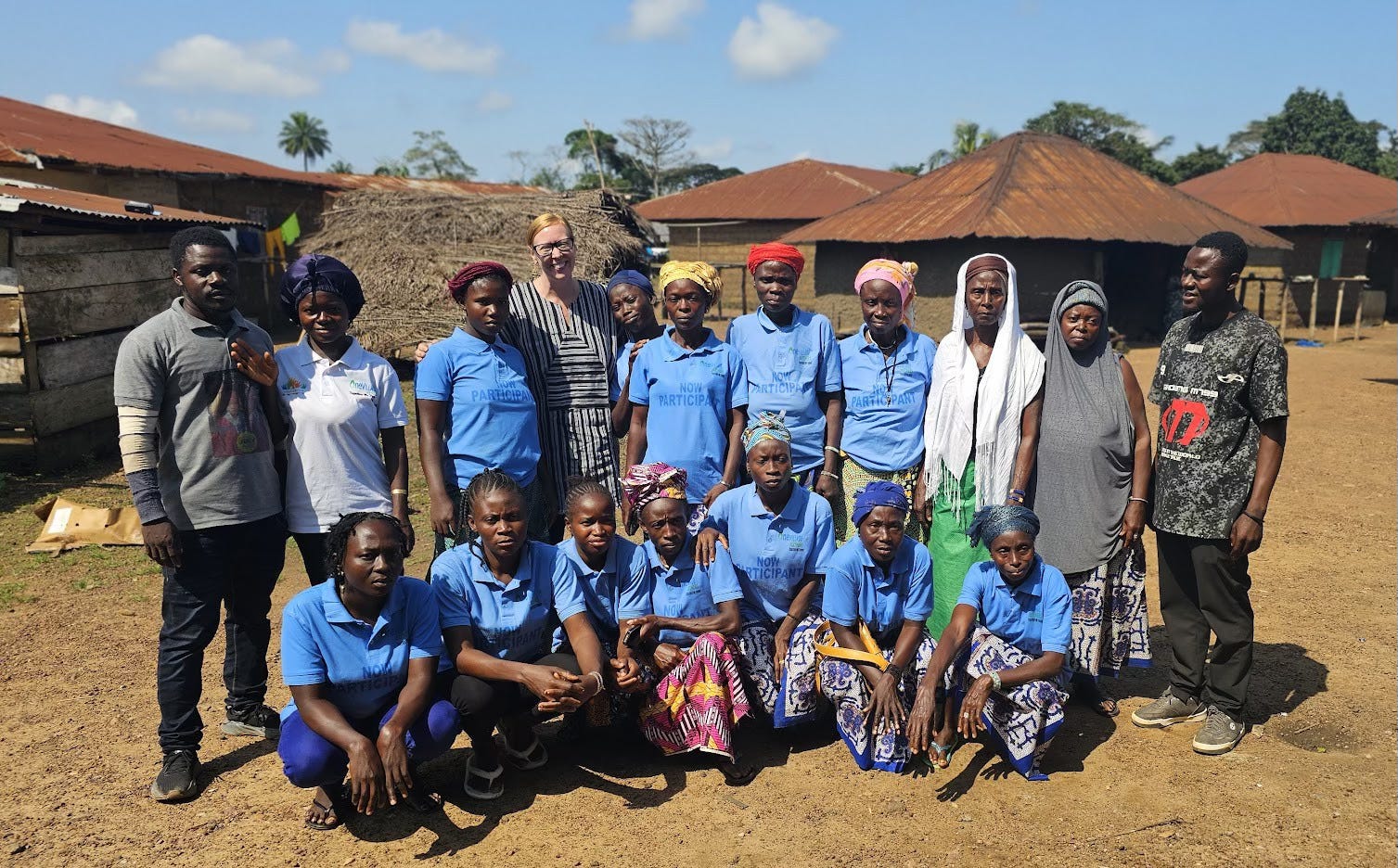
Others have found ways to invest their skills while waiting for paid work and the sector to rebuild.
Alongside her two jobs, Jacobsen is a volunteer with Movement in Refuge, a newly established nonprofit using play and sport to support young people in refugee camps. She also supports Platform for Peace and Humanity.
“I want to be ready for when a paid humanitarian role comes again,” said Jacobsen. “I’m doing what I need to do to survive, but I’m craving learning and I’m taking this time to contribute and grow.”
Shaping the future of aid
Many former USAID staff believe individual and private initiatives matter, but they cannot replace large-scale public investment. For them, regeneration also means shaping what comes next.
Kaliel is clear Crisis in Care can only meet a small fraction of needs once provided by USAID. Alongside that work, she is working to shape the future of aid. She has written a policy brief on direct foreign government funding for global public health and has published an article on same topic in Foreign Policy.
Kaliel mirrors a broader pattern among former USAID staff: applying their experience to influence policy, public understanding, and long-term direction of foreign assistance.
“Do we let Congress sit back and do nothing,” asked Lala Kasimova, “or do we try to arm Congress with the information and constituent pressure it needs to understand how development and humanitarian aid actually works, and what Americans care about?”
Kasimova spent 15 years working on and off with USAID and is now Chief of Staff at Aid on the Hill, a nonpartisan initiative formed by former staff after the agency’s dismantling. What began as informal conversations about job loss quickly became a coordinated effort to educate Congress and the public on the role of foreign aid.
Over the past year, Aid on the Hill has delivered thousands of constituent letters, produced policy briefs directly responding to congressional questions and helped build bipartisan support for Congress allocating $50 billion for foreign aid in 2026, restoring much of the funding that had been cut.
Aid on the Hill is now turning toward civic education, which Kasimova sees as essential to sustaining that support over time.
“We need to build understanding at the church-basement level,” she said. “How to talk about aid around a dinner table. How to respond when family members or friends repeat misinformation about foreign aid, its scale, or its relevance to people’s lives here.”
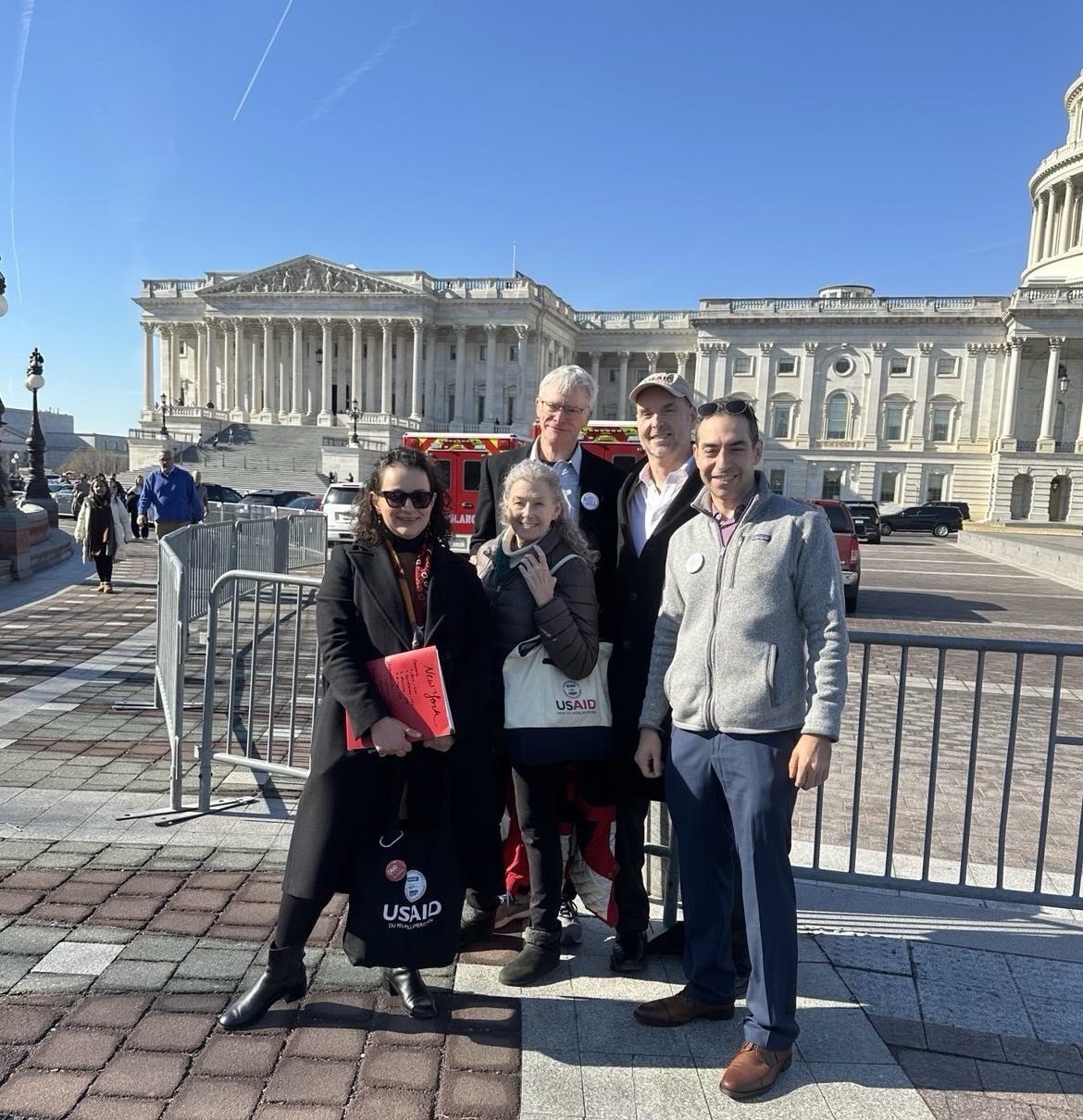
Doug Mercado is motivated by the same concern: rebuilding public understanding and civic engagement around humanitarian aid. Over 29 years, Mercado worked on-and-off with USAID supporting emergency response operations in places including Ethiopia, Haiti, Iraq, Sudan, and Ukraine.
He is now bringing that experience into classrooms. As a visiting lecturer at Princeton University and Indiana University, and guest speaker at other institutions, Mercado teaches courses on humanitarian assistance.
“Students often come in with very little understanding of the scale of humanitarian need or who responds to it,” he said. “But you can see the shift over the course of the semester.”
By engaging students who will go on to work across sectors, he hopes the lessons endure.
“They may not enter humanitarian work,” Mercado said, “but they’ll carry that understanding forward. They’ll know humanitarian assistance matters.”
Micaela White is also thinking about how to shape the future of aid through civic institutions. Drawing on her roots as a Rotary Club scholar and decades as part of the Disaster Assistance Response Teams, she sees untapped potential in public-private partnerships.
“Rotary members are often leaders in their industries,” she said. “With the right guidance, they could play an important role in disaster preparedness and response in their own communities.”
She has seen this model work before.
Rotary Clubs helped expand access to polio vaccines and improve maternal and child health outcomes worldwide. “Perhaps,” she said, “it’s time to apply that same energy and coordination to preparedness and response for local disasters.”
New growth takes root
Across these efforts, a pattern becomes visible.
The humanitarian calling behind USAID did not end when the institution was dismantled. It was carried by people, and when the agency fell away that calling did not disappear. It moved into neighborhoods, classrooms, civic institutions, and nonprofit organizations.
These tensions can be held at the same time: grief and hope, loss and renewal. The dismantling of USAID was devastating, and it continues to have real human consequences. Nothing described here replaces what was lost or matches its scale or reach. And still, something persists.
That persistence shows up in concrete ways: in an EMT-in-training responding to emergencies after work; in meals cooked or groceries delivered to a neighbor across the street; in skills and experience brought into a non-profit; in former staff working to keep health clinics open, to educate Congress, or to help the public understand why foreign aid matters.
It is also present in the staff that stayed in the field or moved to the State Department working steadfastly to keep programs going.
And it is in the waiting, where people are regrouping, resting, or surviving, their calling intact when their path forward is unclear.
These stories matter.
On their own, they can look like coping or isolated acts of good will. Taken together, they reveal something else: a calling that did not vanish, and a landscape beginning to regenerate.
A year on, what matters is remembering that life persists even after devastation, and that a barren charred landscape does not remain so forever. Regeneration does not mean the fire did not matter. It means that destruction is not the final word.
The humanitarian calling, the impulse to serve and help make people’s lives better, endures. Like the Banksia plant, it survives the fire by carrying within it the capacity to begin again, wherever it finds ground.
I wrote this piece one year after USAID was dismantled. The idea began taking shape months earlier, as I kept meeting former USAID staff who, despite profound loss, were still finding ways to serve and show up for others.
The aid funding cuts in 2025 affected not only USAID staff, but thousands more whose work depended on U.S. and other government support, including my own. For many, a calling once lived out through a single institution suddenly had no home. And yet, in conversation after conversation, I was reminded that vocational calling runs deeper than any one agency. It can be disrupted, redirected and reshaped, but it is not easily extinguished.
If this story resonates with you, I’d be grateful if you shared it, left a comment, or subscribed for future stories.
This is a beautiful and devastating story. Thank you!
This goes to the heart of resilience and finding new ways to serve and educate others. Very moving!